
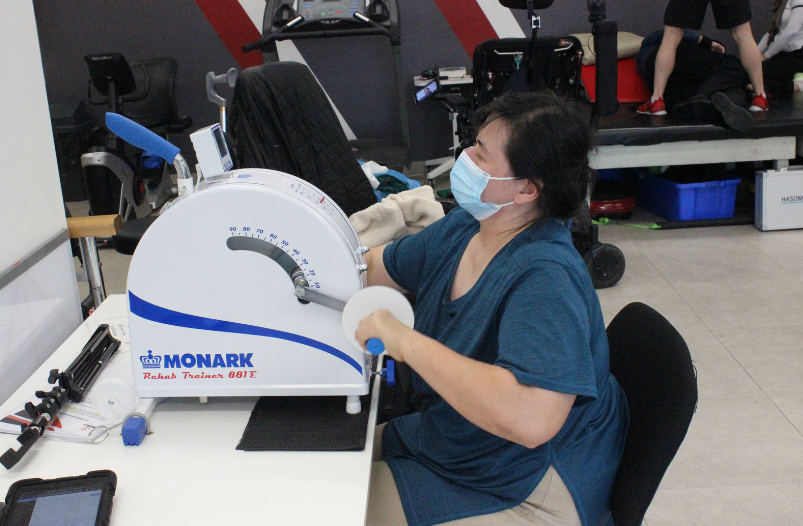
A while back we released an E-book titled “Staying fit after a disability”, and in the cardio section there was this throwaway line…
“Perhaps you only have voluntary control of a part of your body after a spinal cord injury (SCI) and feel that no matter how hard you pump your arms you can’t quite get your heart rate high enough to be a true cardio workout.”
… and we left it at that.
A more detailed explanation was a bit beyond the scope of that content, and it was long enough as it was. The rationale here was that we were already pushing our luck trying to convince the reader that cardio was a good thing, and we would most certainly lose them if we went down the rabbit hole of supraspinal sympathetic nervous control, type II muscle fibre transitions, glucose toleran…
See what I mean? Almost lost you there.
Today’s post, however, is all about that, and despite the all-too-common occurrence of words with more than three syllables, it’s fascinating and helpful.
In today’s blog we are looking at cardiovascular exercise after a spinal cord injury. Why do it? What are some unique challenges? What are the best ways to go about it?
First of all, why bother doing it at all?
The age-old question of why go for a run when if you eat cake fast enough your Fitbit thinks you’re on the treadmill?
Cardio is essential for everyone, SCI or not. It improves heart and lung health, improves the quality of sleep, boosts mental health, aids weight loss, justifies rewarding yourself with KFC, enhances your immune system, helps improve bone density and heightens cognitive power. Pretty impressive.
On top of that, cardiovascular training is one of the most potent preventative practices for chronic and lifestyle diseases like heart disease and diabetes.
Take diabetes for example. Type 2 diabetes is almost three times as common amongst those with a SCI, which is awful. A big reason why that’s the case is because when a muscle is paralysed, or even just predominantly inactive, the proportion of muscle fibres that are great at sucking up sugar and binding with insulin goes way down relative to the fibres that are rubbish at the job.
The good news about this is that a 2010 study conducted in NSW demonstrated that physical activity (which you have control over) is a stronger determinant of blood sugar levels than
SCI level (which you don’t have control over), and regular exercise (including FES on the lower limb) can decrease the reduction in these good fibres from 41% to just 9%.
What’s in the way?
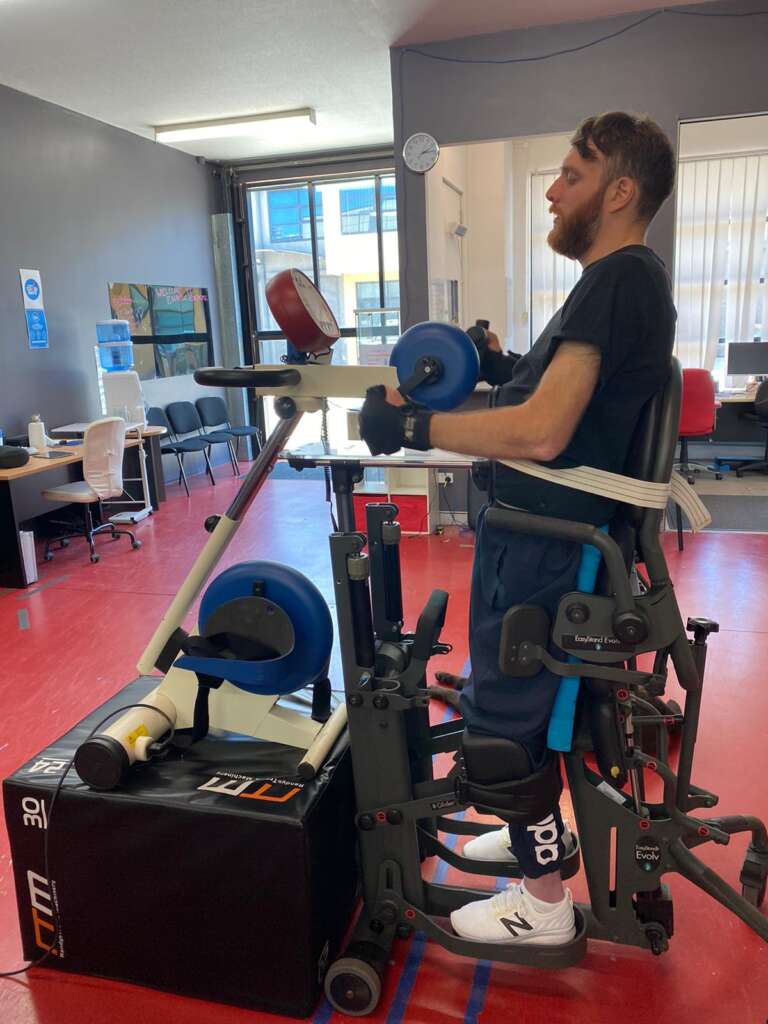 For standard population workouts, a certain heart rate is generally prescribed to aim for throughout the session, but this tactic poses a few challenges for our para or quadriplegic athletes.
Injuries above the 4th thoracic vertebrae block a lot of input from the autonomic nervous system to the brain. This is the stuff that usually happens in the background without you being aware of it, stuff like your “fight or flight” response, temperature control, or blood pressure (which is why many tetraplegic athletes will commonly feel cold or lightheaded, they don’t have these things being autocorrected in the background).
Part of that blocked ‘fight or flight” response is a heart rate that doesn’t increase very much when you start working out. The upside of this is if you’re wearing a heart rate monitor while watching scary movies you’ll look incredibly brave, the downside is when exercising you’ll have a harder time getting the blood (and consequently oxygen) to your working muscles to meet the demand.
For those with a lesion below T4, you’ll still face the challenge of the fact that the upper body has a lower muscle mass (therefore less stuff asking for oxygen) than the lower body, so there is less feedback going to the brain asking for a faster heartbeat.
As a result, you’ll have to work harder for an equal increase than running or cycling. This is why professional athletes will roughly score only 70% of their maximum output when conducting a max test on an arm crank over a cycle.
How should I go about it?
Although it seems you have everything stacked up against you, there are many, many ways to accommodate these challenges and still get a meaningful cardiovascular training session in.
Frequency: How often should you train per week? Start off with 2 – 3 times a week and work up to 5 – 6 days.
Intensity: If heart rate isn’t a reliable measure of how hard you’re working, ratings of perceived exertion are the next gold standard. Simply put, while you’re exercising ask yourself “On a scale of 1 – 10, 1 being asleep and 10 being wrestling Dwayne Johnson while pulling a pallet of bricks uphill, how hard do I feel I’m working right now?” and aim to honestly answer 6 – 8 each time.
Time: Aim for 20 – 30 minutes of continuous exercise, but if that’s too daunting start with 30 second intervals with 30 seconds of rest in between.
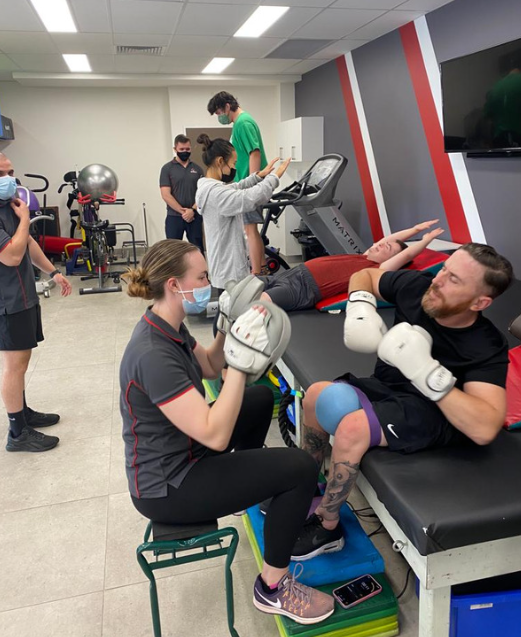
Type: What kind of cardio you should do? The simple answer is whatever you enjoy. There a several kinds available; wheelchair pushing, arm cranking, ski ergometer, rowing, boxing, or wheelchair sports such as rugby or tennis.
Need some assistance?
Functional electrical stimulation (FES) on the lower limbs is a valuable option for cardio, especially when simultaneously paired with an upper limb exercise (e.g., FES cycling with arm cranking). For a more detailed explanation of FES see our blog post on the topic.
Some other considerations when exercising, try using abdominal binders, elastic stockings, or exercising while laying on your back to help blood return to the heart instead of pooling in your legs. This will improve your cardiac output and reduce the onset of any light-headedness.
Conclusion
Finally, in my biased opinion, your best option for finding a workout that works for you is to have a session with an Exercise Physiologist at Enable Exercise. They’ll be aware of each of these considerations and will find an effective option that you’ll enjoy. Above all, be safe and be kind to yourself. Regardless of wherever you’re at now, you’re not beyond improving your health and quality of life through effective and meaningful exercise.
References:
Astorino, T., & Emma, D. (2021). Differences in Physiological and Perceptual Responses to High Intensity Interval Exercise Between Arm and Leg Cycling. Frontiers In Physiology, 12. doi: 10.3389/fphys.2021.700294
Cragg, J., Noonan, V., Dvorak, M., Krassioukov, A., Mancini, G., & Borisoff, J. (2013). Spinal cord injury and type 2 diabetes: Results from a population health survey. Neurology, 81(21), 1864-1868. doi: 10.1212/01.wnl.0000436074.98534.6e
Crameri, R., Weston, A., Rutkowski, S., Middleton, J., Davis, G., & Sutton, J. (2000). Effects of electrical stimulation leg training during the acute phase of spinal cord injury: a pilot study. European Journal Of Applied Physiology, 83(4-5), 409-415. doi: 10.1007/s004210000263
Raymond, J., Harmer, A., Temesi, J., & van Kemenade, C. (2010). Glucose tolerance and physical activity level in people with spinal cord injury. Spinal Cord, 48(8), 591-596. doi: 10.1038/sc.2009.180

